Monday Men: John MacArthur, who was he and what did he do?
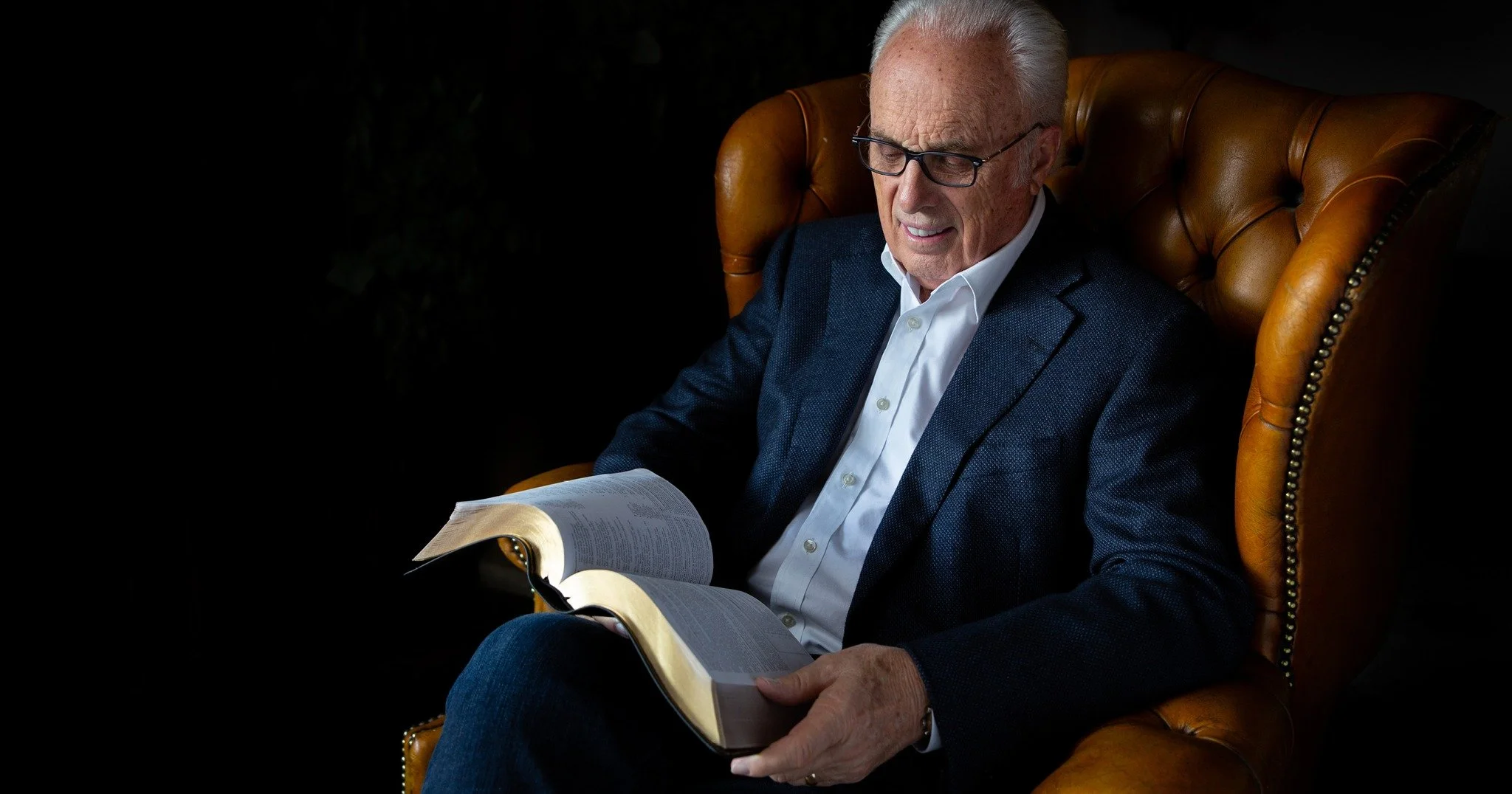
John Fullerton MacArthur Jr. was one of the most influential evangelical pastors, Bible teachers, and theological voices of the late twentieth and early twenty-first centuries. Known especially for his commitment to expository preaching, biblical inerrancy, cessationism, complementarianism, and what became known as “Lordship salvation,” MacArthur’s ministry shaped generations of pastors, students, missionaries, and lay Christians. His influence spread far beyond Grace Community Church in Sun Valley, California, through Grace to You, The Master’s University, The Master’s Seminary, the Shepherds Conference, the MacArthur Study Bible, and his many books and commentaries. Whether admired or criticized, MacArthur cannot be ignored as a major figure in modern conservative evangelicalism.
MacArthur was born on June 19, 1939, in Los Angeles, California, into a family already marked by Christian ministry. His father, Jack MacArthur, was a Baptist preacher and radio evangelist, and John grew up around preaching, church life, and public ministry. This background helped shape his sense of calling, though his eventual ministry would develop its own distinct character. As a young man, MacArthur was athletic and competitive, playing sports and pursuing education in a context shaped by conservative evangelical Christianity. He attended Bob Jones University for a time and later transferred to Los Angeles Pacific College. He then studied at Talbot Theological Seminary, where he received formal preparation for pastoral ministry.
In 1969, after graduating from Talbot, MacArthur became pastor-teacher of Grace Community Church in Sun Valley, California. He was only twenty-nine years old when he began what would become a fifty-six-year pulpit ministry. From the beginning, MacArthur’s emphasis was clear: he believed the church needed the careful, verse-by-verse exposition of Scripture. Rather than building his ministry around entertainment, personality, social trends, or topical inspiration, he sought to explain the meaning of the biblical text in its grammatical, historical, and theological context. This approach became the center of his preaching identity. His phrase “unleashing God’s truth, one verse at a time” captured the heart of his ministry philosophy.
Under MacArthur’s leadership, Grace Community Church grew into a large and active congregation, but its significance was not only numerical. The church became known for serious Bible teaching, lay ministry, fellowship groups, missionary involvement, and pastoral training. MacArthur did not view preaching as a brief motivational talk. He believed preaching was the authoritative proclamation of God’s Word, and that the preacher’s task was to explain what Scripture says and apply it faithfully. Over the course of his ministry, he preached through the entire New Testament, producing thousands of sermons that would later be distributed around the world.
The media ministry Grace to You grew out of recordings originally made for homebound members of Grace Community Church. Those recordings eventually became radio broadcasts, printed resources, television programming, and a massive online sermon archive. Through Grace to You, MacArthur’s preaching reached people who would never visit Sun Valley. His sermons were heard by pastors in small churches, believers in other countries, seminary students, new converts, and Christians hungry for deeper Bible teaching. This gave MacArthur a global influence unusual for a local church pastor. He remained tied to one congregation for his whole ministry, yet his voice traveled worldwide.
MacArthur was also a major institution builder. In 1985, he became president of what is now The Master’s University, formerly Los Angeles Baptist College and later The Master’s College. Under his leadership, the school strengthened its identity around biblical authority, conservative theology, and Christian higher education. In 1986, he founded The Master’s Seminary, located on the campus of Grace Community Church, with the goal of training men for pastoral ministry and missionary service. The seminary reflected MacArthur’s central convictions: Scripture is inerrant, preaching must be expository, theology must be precise, and pastors must be trained to handle the Word of God accurately.
MacArthur’s published works also expanded his influence. His 1988 book The Gospel According to Jesus became one of his most important and controversial works. In it, he argued against versions of evangelicalism that separated Jesus as Savior from Jesus as Lord. MacArthur insisted that saving faith is not mere intellectual agreement or an empty profession, but a faith that bows before Christ. This “Lordship salvation” emphasis led to debate, but it also helped many Christians think more carefully about repentance, discipleship, assurance, and the nature of genuine conversion. His other major works included The MacArthur Study Bible, The MacArthur New Testament Commentary series, Ashamed of the Gospel, Our Sufficiency in Christ, Strange Fire, The Truth War, and Biblical Doctrine.
The MacArthur Study Bible became one of his most widely used resources. First published in 1997, it placed MacArthur’s notes, explanations, cross-references, and theological comments into the hands of ordinary Bible readers. For many Christians, it served as a first introduction to serious Bible study. His New Testament commentary series also reflected decades of preaching and study. Though not everyone agreed with his interpretive conclusions, especially on eschatology, cessationism, or ecclesiology, his work helped many readers see the importance of careful exposition and doctrinal clarity.
MacArthur’s theology was broadly Reformed in its doctrine of salvation, strongly dispensational in its approach to redemptive history and eschatology, Baptist in many ecclesiological instincts, and conservative evangelical in its moral and cultural commitments. He was a strong defender of biblical inerrancy and opposed theological liberalism, pragmatism, the prosperity gospel, Roman Catholicism, charismatic excesses, and what he saw as evangelical compromise. He was especially known for his critique of the charismatic movement, most visibly through his book and conference Strange Fire. He also strongly defended complementarianism, arguing that Scripture reserves pastoral office for qualified men.
His ministry was not without controversy. MacArthur was often direct, and his public critiques sometimes drew sharp responses. He was criticized for comments about women Bible teachers, his opposition to charismatic theology, his approach to church discipline, and Grace Community Church’s handling of abuse-related situations. During the COVID-19 pandemic, he also became nationally known for resisting government restrictions on in-person worship. Supporters viewed that stand as a defense of Christ’s lordship over the church and religious liberty. Critics viewed it as reckless and defiant. These controversies are part of any honest account of his legacy.
John MacArthur died on July 14, 2025, at the age of eighty-six, after decades of ministry and recent health struggles. He was survived by his wife, Patricia, their children, grandchildren, and great-grandchildren. His death marked the end of an era for Grace Community Church, The Master’s institutions, and a large portion of conservative evangelicalism. Yet his influence continues through sermons, books, trained pastors, churches, and ministries shaped by his teaching.
MacArthur’s legacy is best understood through his central conviction: the Word of God is sufficient, authoritative, clear, and powerful. He believed the preacher’s task was not to invent a message, but to explain the message God had already given. Christians may evaluate his ministry with gratitude and discernment, recognizing both his strengths and the controversies that surrounded him. But his lasting contribution is undeniable. John MacArthur called the church back to the Bible, modeled a lifetime of pulpit faithfulness, and reminded pastors that the deepest need of God’s people is not novelty, but the faithful exposition of Scripture.